 Cape Group Home Page Now part of: Berkshire Hathaway Homeservices Robert Paul Properties as of Februry 2010 BHHS RPP Mission Statement Do you have a wish list? Send us an email and we'll help you find it !  Thoughtful Thorough and Responsive Search the MLSs (Cape and Off Cape) Do you need a real estate Professional somewhere else in the US? We can put you in touch with other experts. Heath Coker's Blog Free Property Value Estimator Falmouth Schools Home Inspectors Consumer Fact Sheet What We Are Who We Are Falmouth Zoning Map (PDF) Loads slowly Where We Are Real Estate Terms "HUD" Homes Mortgage Calculator Septic System Information Great Properties Coker Family Page Contact us (Click here for email) OR ©Heath Coker capegroup@capegroup.com 39 Judy Ann Dr, East Falmouth. MA. 02536 USA Tel:(508) 548 8888 It's a beautiful day on Cape Cod! The Cape Group is now a part of: Berkshire Hathaway Home Services Robert Paul Properties Heath & Holly Coker Falmouth MA Best Real Estate Agents Cape Group Home Page  Professional River Outfitters Grand Canyon River Trips (Heath's Sister)  You can find great local real estate information on the ActiveRain Real Estate Network, an online community to help real estate professionals and the public. |
This web page was prepared for the Home Owners, Home Builders, Residents, Septage Pumpers, Realtors and Lending Institutions in the OCPC area. Your On-Site Sewage Disposal System can provide trouble free service for many years if maintained properly. This page addresses the following topics: system info / indications of failure / reasons for failure / prevention steps / top of page / home page
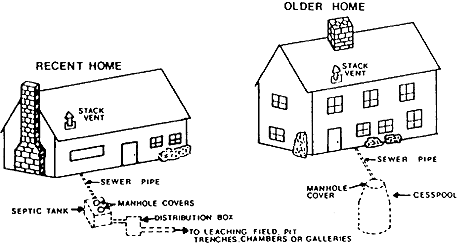
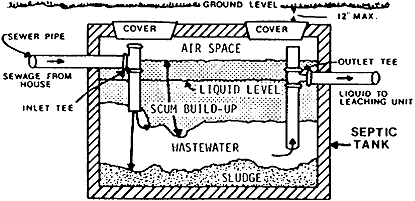
ON-SITE SEWAGE DISPOSAL SYSTEMS INFORMATION Your on-site disposal system is just as important to you as your furnace. A new system of any type or repairs to the old one are very costly. Cost variation is due to the type of failure, soil conditions. water table and lot size. Proper MAINTENANCE is the least expensive method. Cesspools are not allowed in new construction, but a large number of our older homes are still using them. From these homes the building sewer (pipe) goes directly to the cesspool. The cesspool is a large pit and the sidewalls could be either concrete block or fieldstone, with an earth bottom. The lighter solids and grease (scum) float at the top and the heavier solids (sludge) settle to the bottom. The liquid seeps through the perforated blocks or the irregular stones. Life span is limited, although with proper MAINTENANCE they could function effectively for many, many years. Should the cesspool overflow, it is usually because the pores in the sidewall and the surrounding soil have been clogged with solids. Normally this occurs from lack of periodical inspections and infrequent pumping out of the scum and sludge. It is recommended that there should be an annual inspection. The approximate composition of household sewage is 40% toilet, 15% laundry, 30% bathing, 10% kitchen and 5% miscellaneous. Cross Section View of a Septic Tank system info / indications of failure / reasons for failure / prevention steps / top of page / home pageINDICATIONS OF A FAILING SYSTEM
system info / indications of failure / reasons for failure / prevention steps / top of page / home pageSOME REASONS WHY YOUR SYSTEM CAN FAIL
system info / indications of failure / reasons for failure / prevention steps / top of page / home pageREASONABLE STEPS TO TAKE TO PREVENT SYSTEM FAILURES
|